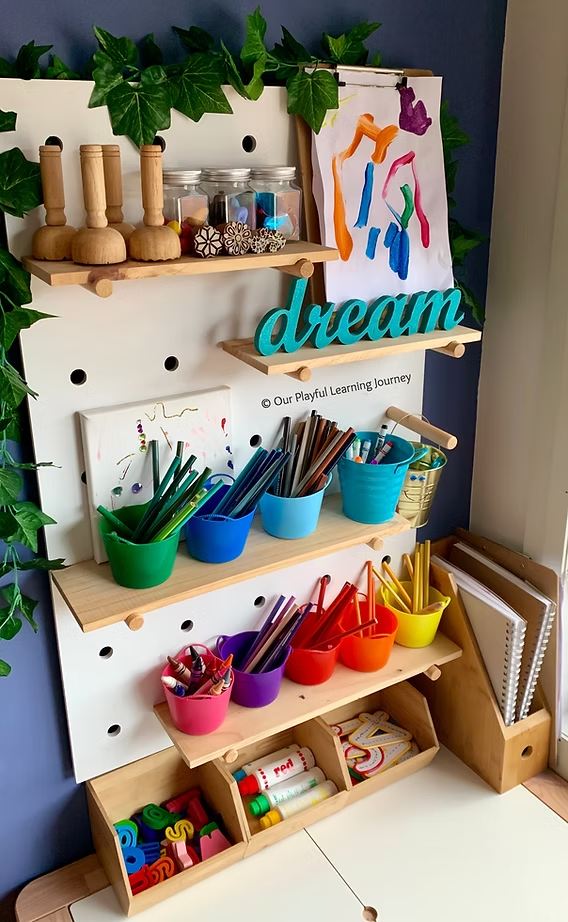
Discover what to include in a child’s learning room to support curiosity, confidence, and natural strengths. Simple, practical, and research-informed ideas for parents.
A learning room is not built by filling it. It is built by choosing carefully.
Many parents feel the need to add more:
more toys
more books
more activities
But children don’t grow because of how much is available.
They grow because of what they can engage with deeply.
A well-designed learning space does not overwhelm the child.
It guides them.
It reflects their interests.
It invites them to return, explore, and build something over time.
In this article, we’ll look at what actually belongs in a learning room — not just generally, but in a way that helps you notice, support, and develop your child’s natural strengths. Because this is our core values; to provide content and tools that facilitate parents and caregivers to identify and develop their children’s natural strengths and talents
1. Start with Open-Ended Core Materials
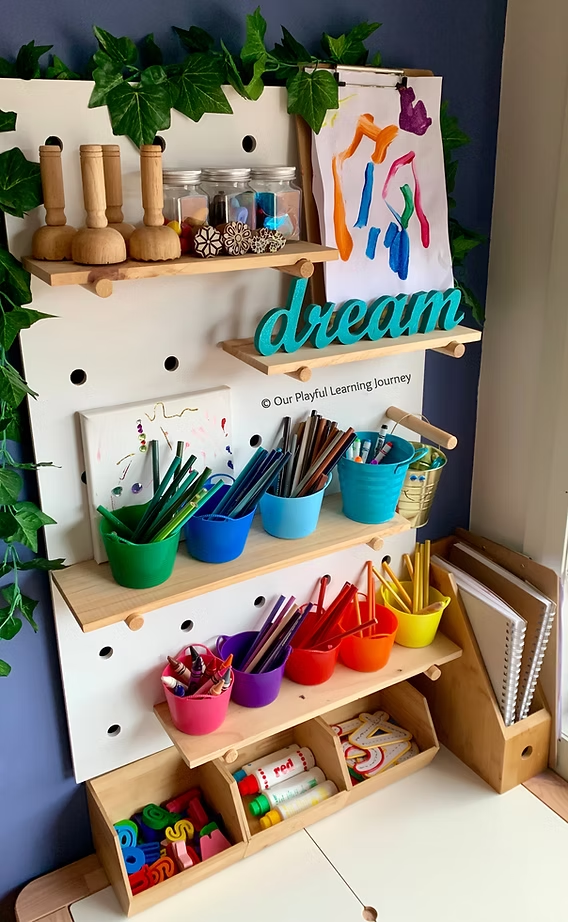
Creative home learning space
Before thinking about specific talents, every learning room should include a small set of open-ended tools.
These are materials that can be used in many different ways.
They support thinking, creativity, and problem-solving across all children.
Examples include:
- paper (different sizes and textures)
- pencils, crayons, markers
- building blocks (wooden blocks, magnetic tiles, LEGO-type sets)
- scissors, glue, tape
- simple craft materials (cardboard, string, clay)
These tools matter because they allow children to:
- create freely
- test ideas
- make mistakes and try again
A child drawing, building, or experimenting is not “just playing.” They are learning how to think.
Open-ended materials are the foundation of every strength.
2. Create Simple “Zones” Instead of One Mixed Space
A powerful learning room is not crowded.
It is organized in a way that helps the child choose with clarity.
Instead of mixing everything together, create small zones.
For example:
Creative zone
- drawing materials
- craft supplies
Building zone
- blocks
- construction toys
Reading corner
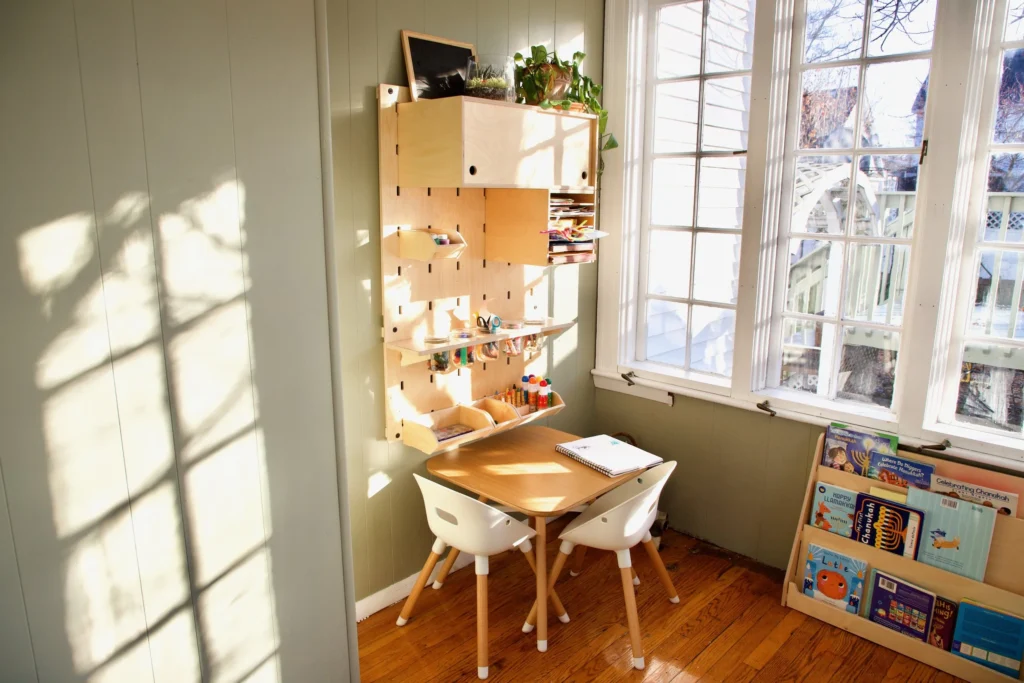
Creative home learning corner
- a few visible, accessible books
- a comfortable place to sit
Exploration table
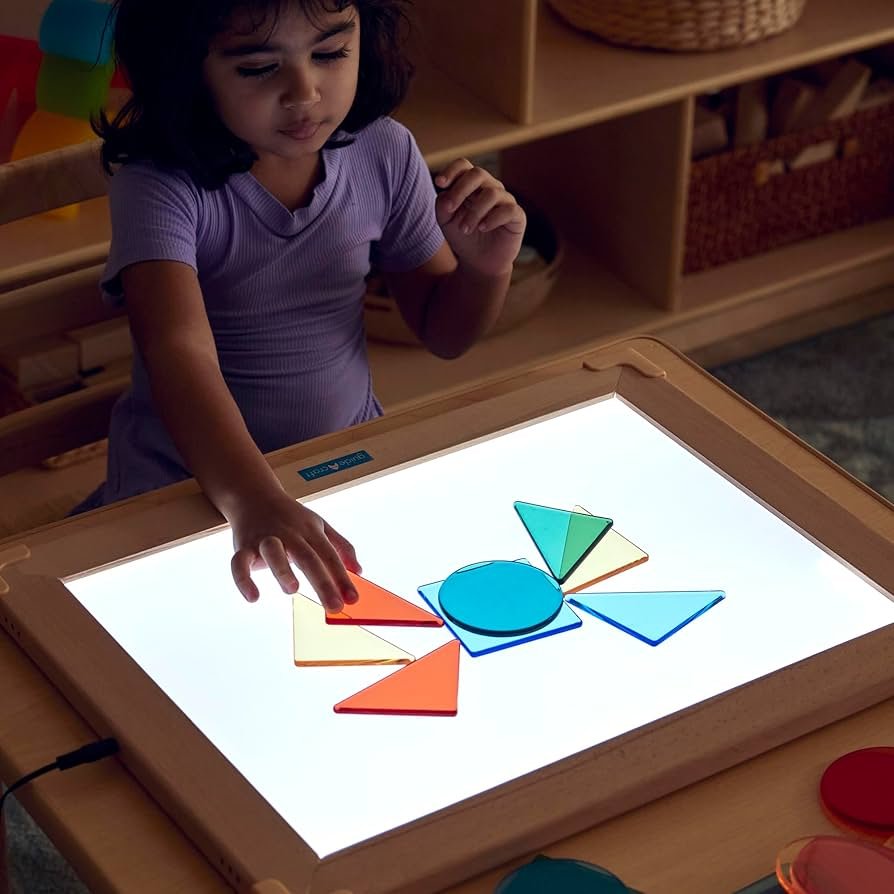
creative Learning from home table!
- puzzles
- simple experiments
- rotating materials
This structure helps children:
focus longer, move independently and
return to activities without confusion
Clarity in space supports clarity in thinking.
3. Follow the Child’s Interest (This Is Where Growth Begins)
Once you begin noticing patterns in your child, the room should start reflecting them.
Not everything at once.
Just enough to support what keeps coming back.
If a child shows interest in:
Drawing or visual expression
- add sketchbooks
- colored pencils
- simple art references
Building and engineering
- more advanced construction sets
- gears, connectors, simple mechanics kits
Music
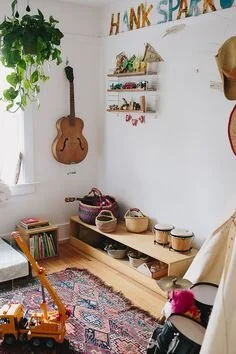
Interest- based (like music) learning room idea
- a small keyboard

interest-based learning area for Music
- a guitar
- rhythm instruments
Movement or sports
- a soft ball
- coordination tools
- space for movement
- visual inspiration (like an image of a favorite player)
Storytelling or language
- notebooks
- story cards
- audio storytelling tools
The goal is not to “decide the child’s talent.”
The goal is to respond to signals.
When a child sees their interest reflected in their space, something important happens:
They feel understood.
And that feeling increases motivation.
4. Keep Materials Accessible (Without Constant Permission)
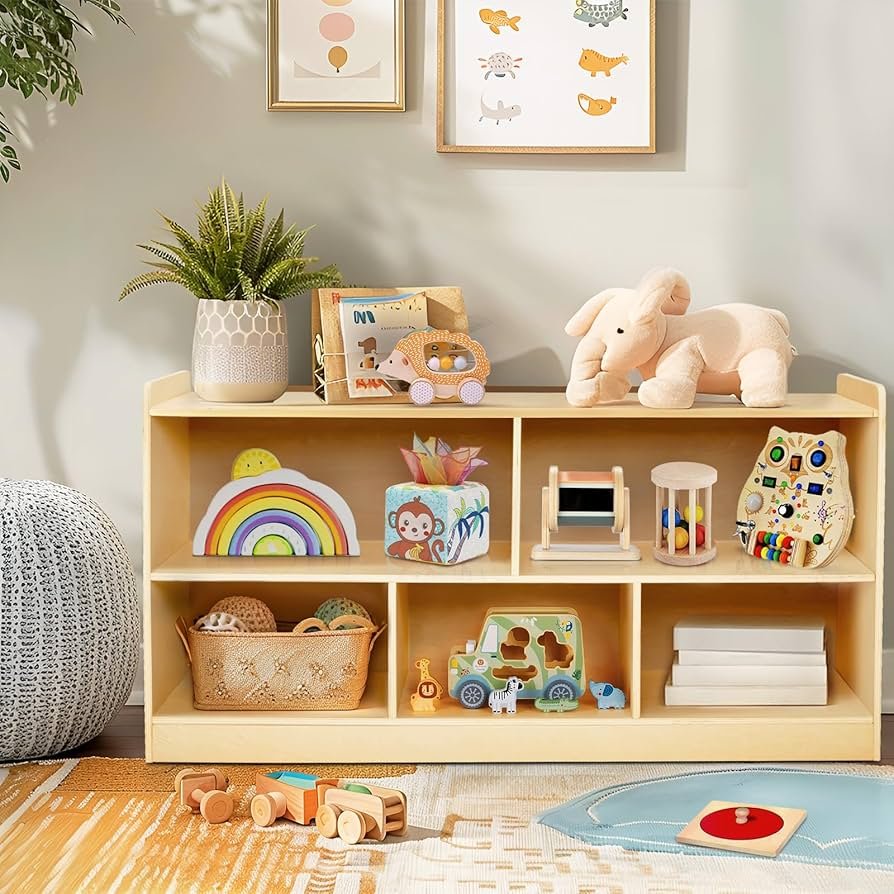
Organized home learning zone.
A learning room only works if the child can use it freely.
If they need to ask every time, exploration slows down.
Arrange the room so that:
- materials are within reach
- tools are visible
- setup is simple
For example:
Instead of storing art supplies in closed boxes,
place them in open containers.
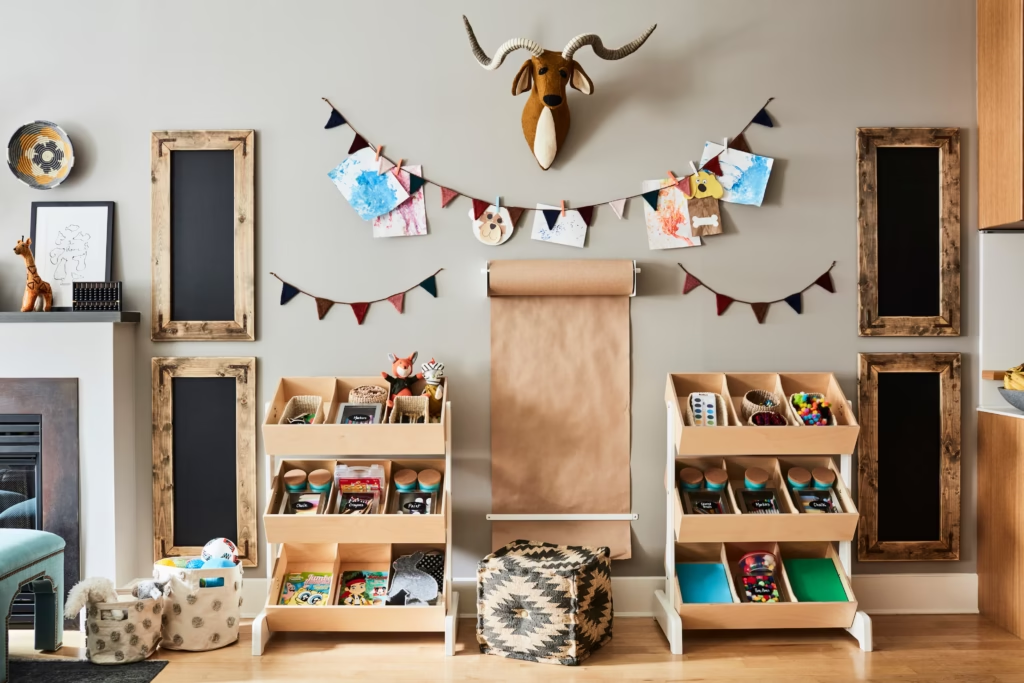
Inspiring and creative learning home area where everything accessible!
Instead of stacking toys,
display a few clearly.
Accessibility builds independence.
And independence builds confidence. If you keep them in storage, the child may think like they are Mama/properties not theirs, that will not lead to belonging, hence they will not use them to explore!
5. Rotate, Don’t Overload
One of the most common mistakes is adding too much.
Too many toys
too many tools
too many choices
This often leads to distraction, not learning.
A better approach is rotation.
Keep only a limited number of materials visible.
Then change them over time based on:
- what the child uses
- what they ignore
- what they return to
This keeps the environment:
fresh
focused
responsive
Children engage more deeply when space is not overwhelming.
6. Add “Inspiration,” Not Just Tools
A learning room is only not about doing. It is also about imagining what is possible.
Small visual elements can guide this:
- a drawing pinned on the wall
- a photo related to their interest (for Example; like basketball Hoop, a known person their admire in related interest; like Christiano Ronaldo if they are interested in football and like him)
- a simple project they completed
- a figure they admire (artist, athlete, scientist)
These are not decorations. They are signals.
They tell the child:
“This matters.”
“This is part of your world.”
And over time, these signals shape identity.
7. What You Say in This Room Matters More Than What You Put in It
The room supports learning.
But your words shape how the child experiences it.
Simple shifts in language make a big difference.
Instead of:
“That’s wrong.”
Try:
“What do you think happened there?”
Instead of:
“Do it like this.”
Try:
“Want to try another way?”
Instead of:
“Be careful, you’ll mess it up.”
Try:
“Let’s see what happens.”
These kinds of responses:
reduce fear
increase curiosity
encourage persistence
The goal is not to correct quickly.
It is to help the child think and try again.
8. Be Present, Not Controlling
The learning room does not replace you.
It works best when you are:
nearby
observing
occasionally engaging
You don’t need to direct everything.
Sometimes, the most powerful role is simply to notice.
For example:
“I saw you kept trying even when it didn’t work.”
“You changed your idea—that was interesting.”
“What part did you enjoy most?”
This kind of interaction:
builds awareness
reinforces effort
helps the child understand themselves
And that is where real development happens.
Why the Right Environment Helps Strengths Become Visible
Children don’t announce their strengths clearly.
They show them through:
- Repetition
- Interest,
- Focus,
- choice
A well-designed learning room makes these signals easier to see.
And when you can see them, you can support them.
Over time:
interest becomes skill
skill becomes confidence
confidence becomes direction
Final Thoughts
You don’t need a perfect room.
You need a responsive one.
A space that:
reflects your child’s interests
allows freedom to explore
supports effort without pressure
and grows as they grow
The tools matter.
But not as much as how they are used.
And not as much as how the child feels while using them.
When the environment is thoughtful and the interaction is supportive,
learning stops being something you push…
and becomes something the child chooses