Create a learning-rich home environment that supports curiosity, confidence, and child development using simple daily habits and spaces.
Children don’t discover their strengths in isolation.
They discover them in environments.
The space your child lives in — the rhythms, the conversations, the objects around them, the emotional tone of the home — all quietly shape how they think, explore, and grow.
A learning-rich home is not about having the best toys, the most books, or the most structured activities.
It is about creating conditions where:
- curiosity feels safe
- exploration feels natural
- effort is supported
- and learning becomes part of everyday life
When the environment is supportive, children don’t need to be pushed.
They begin to grow from within.
What Is a Learning-Rich Environment?
A learning-rich home is not a classroom.
It is a space where learning happens naturally through:
- daily interactions
- play ( read here; why play is essential for child development by American Academy of Pediatrics)
- observation
- conversation
- and exploration
Neuroscientist Daniel J. Siegel often emphasizes that children’s brains develop through experience and relationships.
This is very crucial when it comes to the home-learning environment that also focuses on identifying, developing, and nurturing the natural strengths of your child. In your home, you may allocate a colorful well-equipped room as a home learning place, but if you can’t spare time to be around your kid; interacting, observing, you’re doing almost nothing.
Most researchers have confirmed that all children one way or another is talented and can thrive in future only if parents are committed to supporting them, because the parents are the only person centered to help the child get empowered!
In simple terms:
What children experience repeatedly becomes how their brain is wired.
This means the environment is not just physical.
It is emotional, relational, and behavioral.
1. Create Emotional Safety First
Learning does not begin with information.
It begins with safety.
When children feel:
- safe
- accepted
- not judged
- free to make mistakes
Their brain becomes open to learning.
When they feel pressure or fear, learning narrows.
For example:
A child who is afraid of being corrected constantly may stop trying new things.
But a child who hears:
“It’s okay, try again.”
I will keep exploring.
Emotional safety is the foundation of curiosity.
2. Make Curiosity Visible in the Home
Children learn what is valued by what they see.
If curiosity is visible, they follow it.
Simple ways to do this:
- Keep books accessible (not hidden on shelves)
- Leave creative materials within reach (paper, pencils, blocks)
- Talk out loud when solving problems
- Ask questions openly
Example:
Instead of saying:
“Don’t touch that.”
Try:
“Let’s see how this works.” this will definitely open curiosity
This small shift turns control into exploration.
3. Design the Environment for Exploration
A learning-rich home does not need to be expensive.
It needs to be intentional.
Think in terms of access.
Can your child easily:
- draw
- build
- read
- explore
- create
For example:
A small corner with:
- paper
- colors
- simple materials
can become a creative space where ideas grow. (In our next article we will mention in detail some of the learning equipment and toys you may put in home learning room depending on their ages)
Children engage more when they don’t need permission every time.
Access encourages independence.
4. Value Process Over Outcome
Many homes unknowingly focus on results:
- grades
- performance
- achievements
But learning happens in the process.
A child building something that collapses is still learning.
A child trying to write and make mistakes is still developing skill.
Instead of saying:
“That’s not right.”
Try:
“You’re figuring it out.”
This shift builds persistence.
And persistence is one of the strongest predictors of long-term growth.
5. Use Everyday Moments as Learning Opportunities
Learning does not need special sessions.
It is already happening.
Daily life offers endless opportunities:
- cooking → measurement and sequencing
- shopping → decision-making
- conversations → language development
- play → problem-solving
For example:
While cooking, you can say:
“What happens if we add more water?”
This invites thinking instead of instruction.
A learning-rich home turns ordinary moments into meaningful ones.
6. Protect Time for Unstructured Play
Unstructured time is where children:
- imagine
- experiment
- create
- solve problems
This is where deeper learning happens.
When every moment is planned, children rely on direction.
When space is open, they rely on themselves.
Research consistently shows that play supports:
- creativity
- executive function
- social skills
Unstructured time is not empty time.
It is development time.
Visual Example: A Simple Learning Space
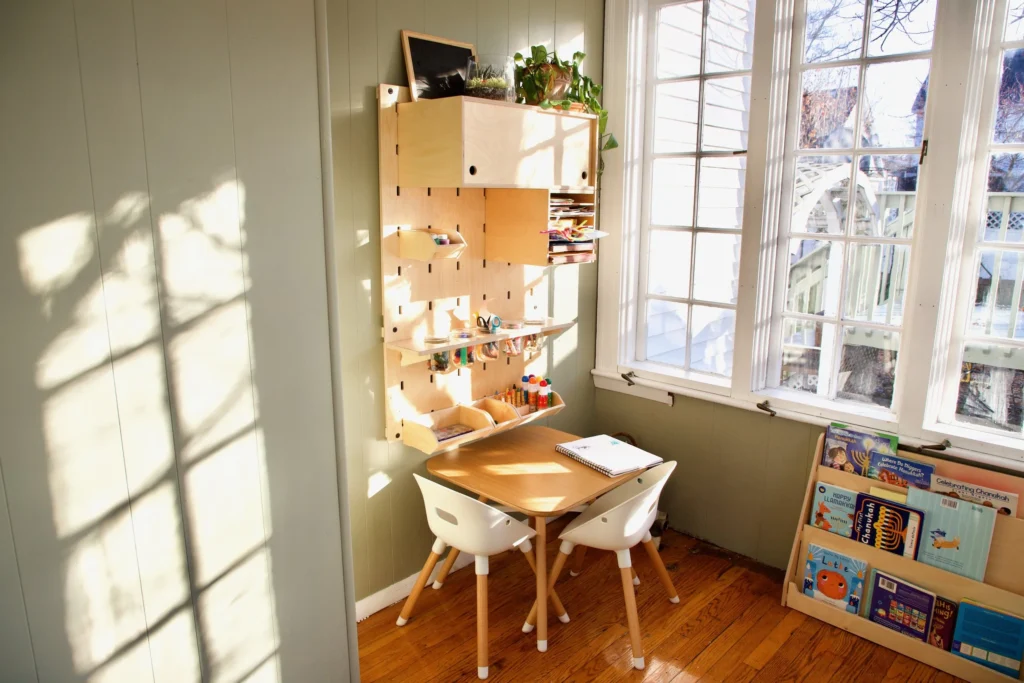
child home learning corner with simple creative materials
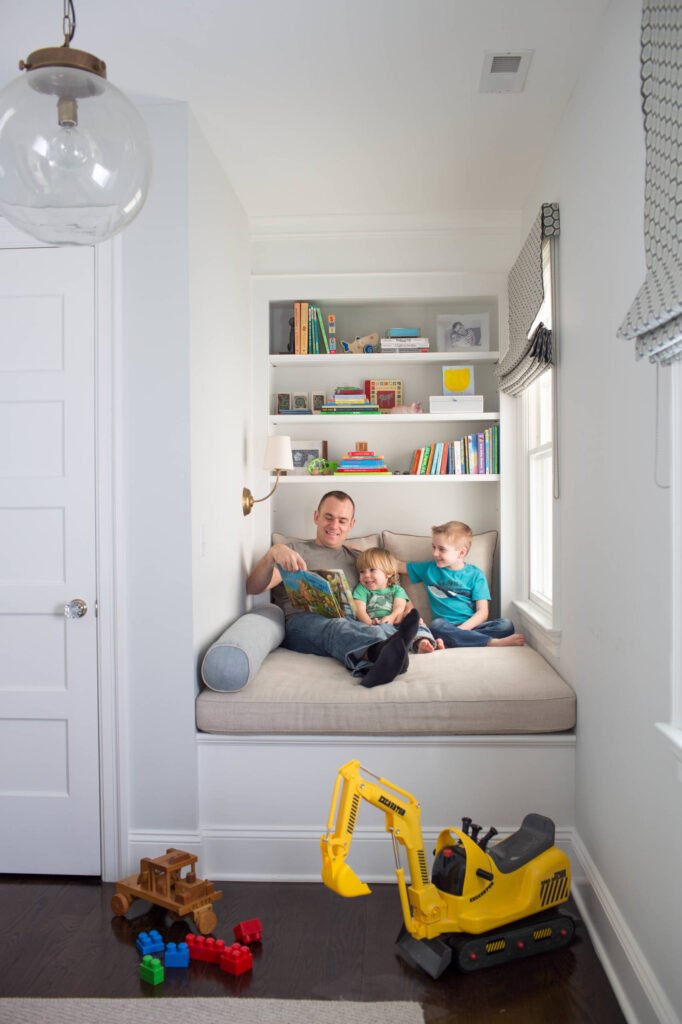
kids art and reading space at home encouraging independent learning
A small, accessible space can be enough.
It does not need to be perfect.
It needs to invite use.
7. Model Learning, Don’t Just Teach It
Children learn more from what you do than what you say. (This is why most children end up doing what their parents do!)
If they see you:
- reading
- asking questions
- trying new things
- making mistakes and continuing
they learn that growth is normal.
For example:
“I don’t know this yet, let’s figure it out.”
This shows learning as a process, not a performance.
8. Reduce Noise, Not Just Add More
A common mistake is thinking:
“More tools = more learning”
But too many toys, activities, or instructions can overwhelm the brain.
Sometimes, less creates focus.
A calm, simple environment helps children:
- concentrate
- think deeply
- engage longer
Clarity supports attention.
And attention supports learning.
Visual Example: Calm vs Overstimulating Space
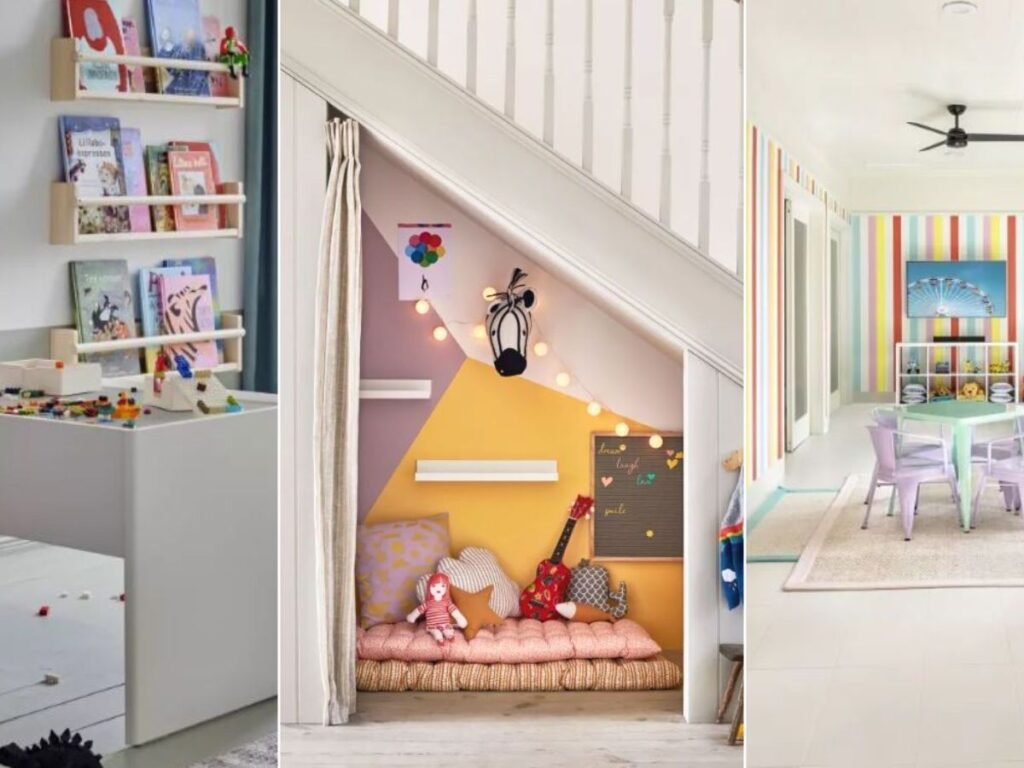
Organized child playroom supporting focus and learning
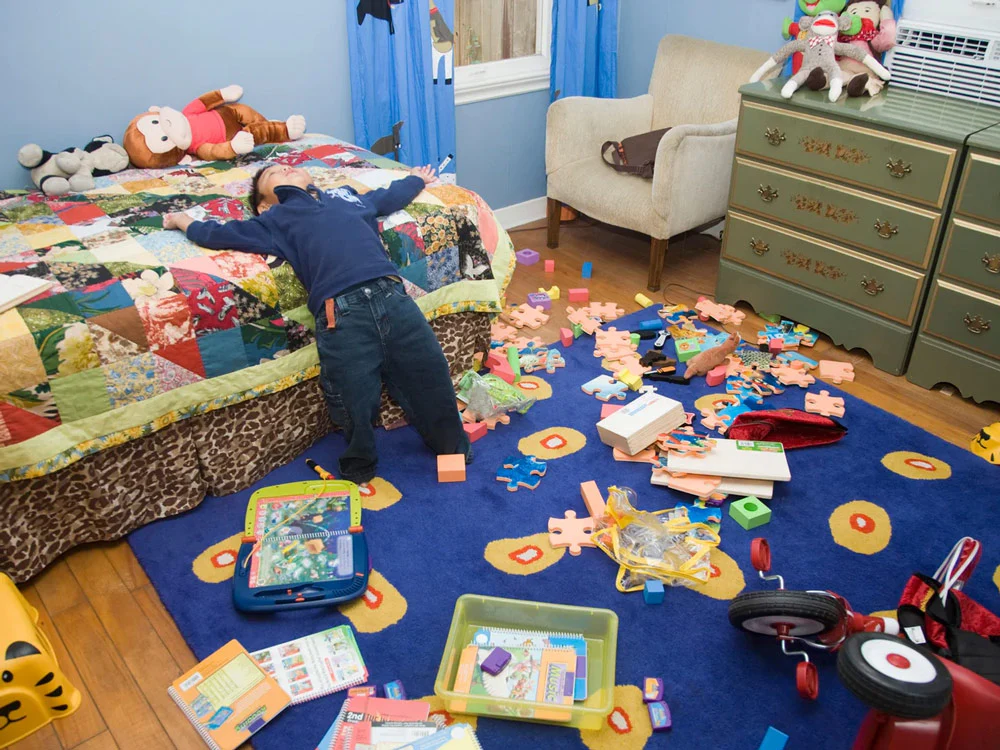
Cluttered playroom with too many toys causing distraction
Children engage more deeply in environments that are not overloaded.
Why Environment Matters for Talent Development
A child’s potential does not grow in isolation.
It grows in response to:
- what is available
- what is encouraged
- what is repeated
A supportive environment helps children:
- notice their interests
- stay engaged longer
- recover from mistakes
- build confidence
Over time, these patterns turn into strengths.
And strengths, when nurtured, become talents.
Final Thoughts
You don’t need to create a perfect home.
You need to create a responsive one.
A place where:
- curiosity is welcomed
- effort is supported
- mistakes are allowed
- and exploration feels natural
Small daily experiences shape how children think.
And how they think shapes who they become.
A learning-rich home does not push children to grow.
It gives them the conditions where growth happens naturally.
And from those conditions, potential begins to unfold.