A powerful story of how one mother’s time, belief, and consistency helped her child grow into his potential despite difficult circumstances.
Many parents believe they need more time, more knowledge, or better conditions to truly support their children.
Some feel too busy.
Others feel unprepared.
Some quietly wonder if they are “enough.”
Life today is demanding.
Work takes time.
Responsibilities pile up.
Energy runs low.
And in the middle of all this, spending time with children can begin to feel like something extra — something to fit in when everything else is done.
But here is something worth thinking about:
Children don’t need perfect conditions.
They need intentional moments.
And sometimes, small consistent actions shape a child’s future more than ideal circumstances ever could.
A Story That Challenges What We Assume
Ben Carson was not always seen as a future success.
As a young boy, he struggled in school.
He was labeled as one of the worst students in his class.
At one point, he believed it himself.
But behind his story was someone who refused to accept that as the end.
His mother.
Sonya Carson was a single parent raising two sons.
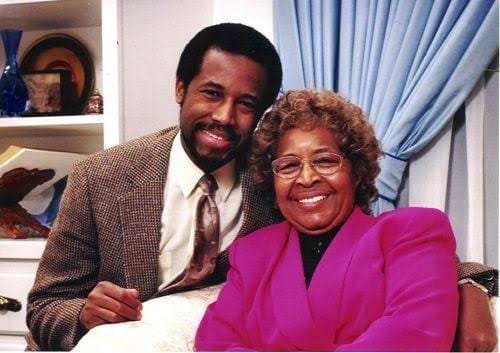
Sonya Carson and her Son; Dr. Ben Carson
She had only a third-grade education.
She worked multiple jobs.
Life was not easy.
But she made one decision that changed everything:
She refused to let her situation define her children’s future.
What She Did Differently
Sonya Carson did not have advanced knowledge of education.
She was not trained in child development.
But she understood something essential:
Environment shapes outcomes.
Even with limited time, she created structure.
She required her sons to:
- Read regularly
- Limit television
- Write reports about what they learned
At first, her sons resisted.
They didn’t understand the purpose.
But over time, something changed.
Their thinking changed.
Their confidence changed.
Their habits changed.
The Power of Belief and Consistency
In his book The Gifted Hands, Ben Carson reflects on his mother’s influence:
“She never let us make excuses… she believed in us when we didn’t believe in ourselves.”
That belief was not just words.
It was shown through:
- expectations
- consistency
- presence
- and guidance
Even while working long hours, she remained intentional about how her children spent their time.
She didn’t control everything.
But she influenced what mattered.
What Changed for the Child
Over time, Ben Carson’s academic performance improved.
But more importantly:
- He began to see himself differently
- He developed confidence
- He became curious
- He started to believe he could learn
Years later, he became one of the most respected neurosurgeons in the world.
But that outcome did not begin in medical school.
It began at home.
With a parent who created the right conditions.
What This Means for Parents Today
This story is not about becoming perfect.
It is not about doing everything.
It is about doing what matters consistently.
Many parents today feel:
- “I don’t have enough time.”
- “I’m not educated enough.”
- “I don’t know where to start.”
But this story shows something important:
You don’t need everything.
You need intention.
Small actions, repeated daily, shape how a child thinks, learns, and grows.
The Science Behind the Story
Modern research supports what this story illustrates.
Children’s brains develop through:
- repeated experiences
- relationships
- and environments
- you may read here on; how relationships shape a child’s brain development; a research of Harvard Center on the Developing child.
Consistent input shapes neural pathways.
Simple habits like:
- reading
- conversation
- reflection
strengthen thinking over time.
This is how potential grows.
Not through pressure.
But through repeated exposure and support.
What You Can Take From This

Mother and child bond reading a book
You don’t need to redesign your life overnight.
Start small.
- Spend focused time, even if it’s short
- Ask your child what they’re learning
- Encourage effort
- Create simple routines
What matters is not how much you do in one day.
It’s what you do consistently over time. read more here; about ´´importance of parental involvement in child development´´ a research of American Psychological Association
Final Thoughts
Some parents wait for the right time.
Others use the time they have.
The difference is not resources.
It is intention.
Your presence, your encouragement, and your belief can shape how your child sees themselves.
And how they see themselves shapes what they become.
You may not control every outcome.
But you can influence the environment where your child grows.
And sometimes, that is enough to change everything.